
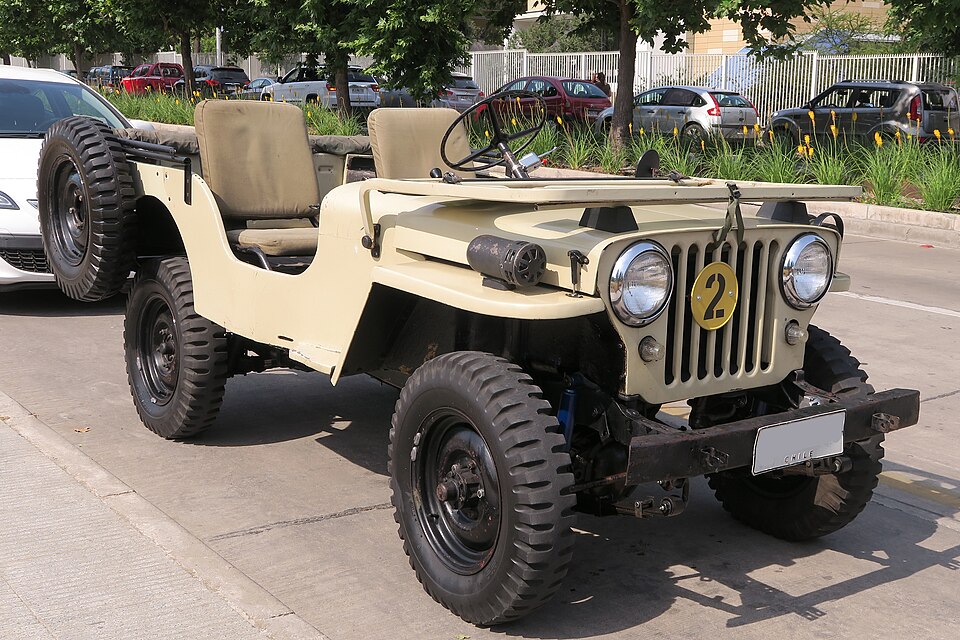
1949
CJ-3A
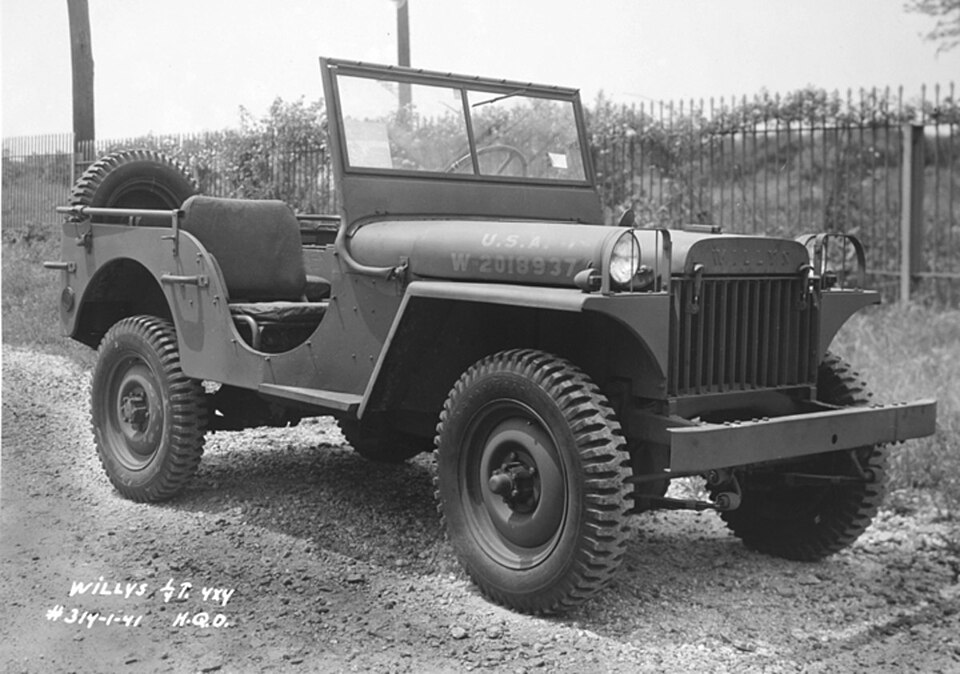
Development of a known concept: one-piece windshield and further improvements for civilian use. The low hood and L-head engine still belong to the early family look. [9]
Bantam · Willys · Ford · Jeep
The story of the men, the engine and the small off-road vehicle that connected the wartime MB and GPW with the civilian CJ family.
Get to know the story ↓

01 / From concept to prototype
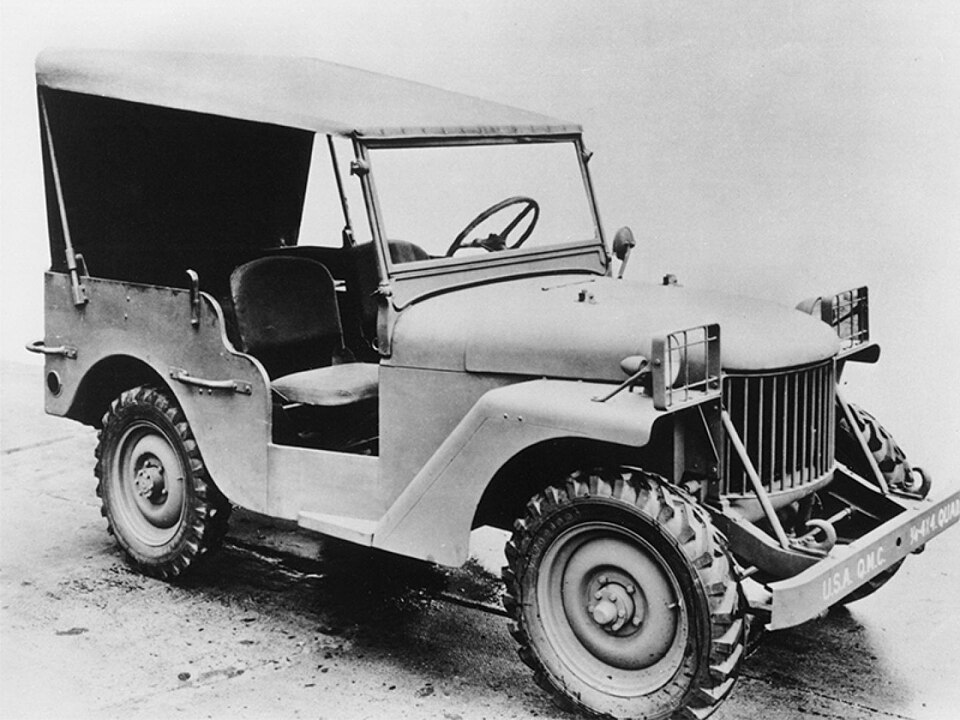
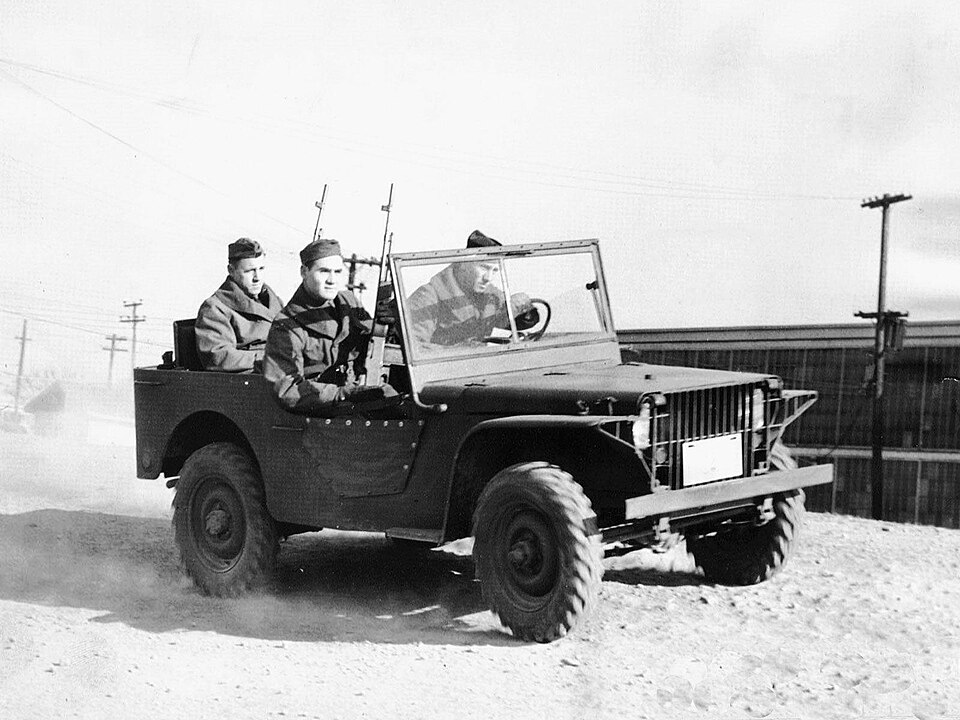
The story of the Willys MB Jeep does not actually begin with the MB model, but with an emergency tender of the US Army in June 1940. Then the Quartermaster Corps requested an all-new quarter-ton light reconnaissance vehicle, with four-wheel drive, a small silhouette, a folding windshield, and the ability to move over rough terrain where motorcycles, cars, or horses had previously been used. Only three manufacturers responded to the call: American Bantam, Willys-Overland and Ford. And Jeep history itself today states that it was Bantam, Willys and Ford that within one year together shaped the model of the vehicle that the whole world would later know as "Jeep".
02 / Bantam arrives first
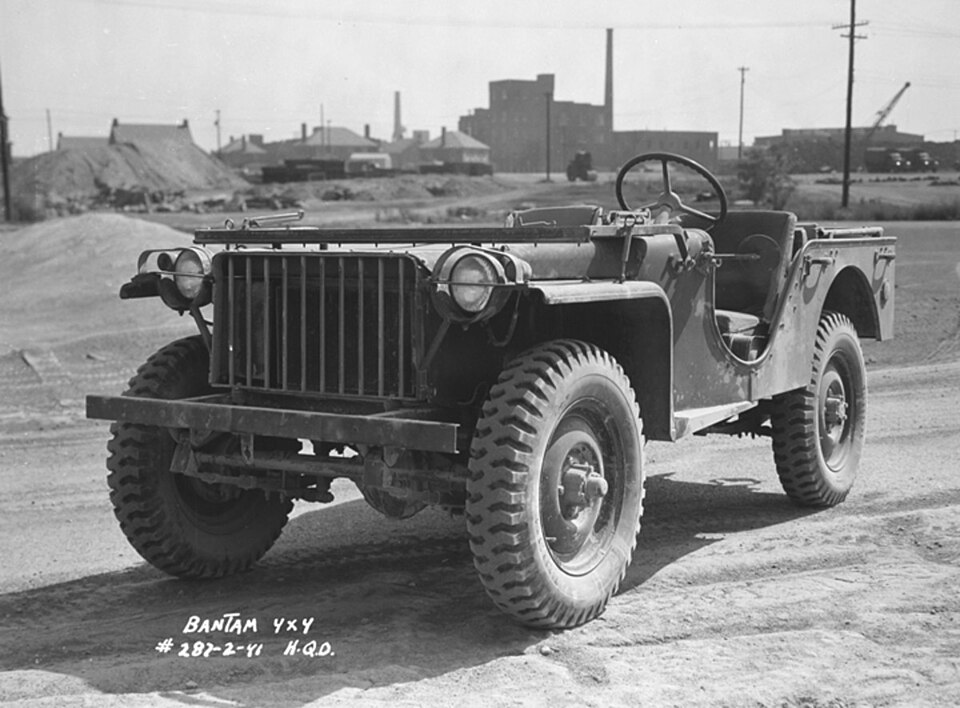
The first great paradox of the Jeep is that the Bantam was both the first and the smallest. The American Bantam Car Company didn't have the capital or production capacity of Ford or Willys, but it was fast enough to meet an almost impossible deadline. The key person in that phase was the engineer Karl Probst, to whom Bantam practically at the last moment entrusted the creation of the layout, basic drawings and mechanical concept. The Bantam received its specification in mid-July 1940, Probst went to work immediately, and the preliminary layout of the vehicle was ready almost immediately; the prototype was then completed within 49 days and arrived at the test center at Camp Holabird on its own wheels. The Smithsonian notes that Bantam produced 62 quarter-ton vehicles with 4x4 drive in 1940, and that this early Bantam is one of the prototypes of the future Jeep.
The engine that Bantam used was not Bantam's own, because the company did not have a powerful enough engine. That's why the Continental BY-4112 was chosen, a 112-cubic-inch, 1.8-liter, four-cylinder L-head engine with approximately 45 to 48 horsepower. That was enough to prove the idea of a light 4x4 scout vehicle, but not to secure the final victory for the Bantam. Bantam's greatest contribution was not only in being the first to arrive, but in showing the military that the whole concept was realistic: short wheelbase, open body, flat surfaces easy to manufacture, low mass and maximally simple mechanics. In other words, the Bantam was the first to practically turn a military specification into an actual vehicle.
03 / Advantage under the hood
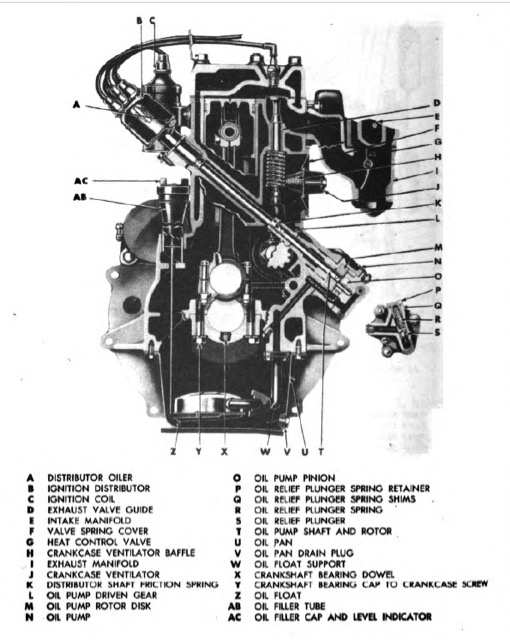
Willys-Overland entered the competition in a different way. Their main asset was not speed but the engine. The most important man at Willys was chief engineer Delmar "Barney" Roos, who even before the competition worked on the improvement of the previous Willys four-cylinder engine. The old engine was weak and unreliable, so Roos and the team developed a much more powerful and durable version: the L134 "Go-Devil". The engine retained its displacement of 134.2 cubic inches, but thanks to improvements such as bearings, a fully counterbalanced crankshaft, aluminum pistons, full pressure lubrication and tweaked valve timing, it was able to test for 100 hours at full load and produce about 60 bhp. MotorTrend states that it was Roos who insisted that Willys enter the military program with that larger engine despite the weight, and that this decision later turned out to be decisive.
On the Willys prototype, known first as the Quad and then in more developed form as the Willys MA, Go-Devil was the biggest advantage over the competition. Compared to the Bantam's Continental of about 45–48 hp and the Ford's engine of about 119.5 cubic inches and about 45 hp, the Willys' engine offered significantly more power and, more importantly for the military, more low-rpm torque. Ford's early GP, or Pygmy/GP development branch, used a side-valve four-cylinder with about 45 hp and approximately 85 lb-ft of torque, based on the Fordson/N-series. On paper the differences may not seem huge, but in the mud, when climbing, towing and moving with a load the difference was very real. The Go-Devil put out about 60 hp and about 105 lb-ft, which was immediately noticeable to soldiers and test committees. This is precisely why the Willys won not because it was the lightest or most beautifully finished, but because its engine provided the best overall utility value.
Early candidate torque · historical values from ASME review
About 24-27% more torque in this comparison. Values are from the development period; they do not represent a comparison of all later engines. 60 bhp is the declaration at the time, different from the modern net measurement.
04 / Ford, standardization and serial production
Ford's contribution to Jeep history is often underestimated because the public mostly remembers the GPW badge as "Ford's version of the Willys." This is true for later series production, but before that Ford had its own development input. The Ford GP introduced several solutions at an early stage that were very important in standardizing the final shape of the jeep. Ford's best-known contribution was the front body with a wide flat hood and headlights moved inward, below the edge of the hood, instead of above the fenders as on earlier ideas. In the production GPW phase, Ford introduces a pressed steel front panel with vertical openings: a solution more suitable for mass production than the welded construction of early MB vehicles. In 1942, the Willys MB took over that pressed mask, so it can be said that the face of the Jeep, as everyone recognizes it today, is largely defined by Ford's production logic.
Therefore, the final Willys MB was actually a hybrid of the best ideas of all three participants. The basic concept of a very short, open and functional scout car with minimal overhangs and a maximally simple body was taken from the Bantam. The improved elements of the front part, a wider flat hood, the arrangement of the headlights and a particularly economical pressed grille were also taken from Ford. From Willys came the engine Go-Devil, and through Delmar Roos and the final engineering design of the vehicle that could withstand prolonged heavy use. That is why it is wrong to claim that a jeep is "only a Bantam", or "only a Willys", or "only a Ford"; it is more historically fair to say that the Bantam was the first to realize the idea, the Ford helped to streamline the shape and production, and the Willys provided the mechanical heart and final standardized form. And the very subsequent history of the dispute over the merits shows how much it was a joint work, although after the war Willys most successfully tied the name "Jeep" to itself.


The Willys MA was the immediate predecessor of the MB model and is interesting today precisely because it shows a transitional phase. The MA retained some early features that would be simplified or strengthened on the MB. During the tests on Bantam, Ford and Willys, the army observed the same types of problems: the vehicles often exceeded the set weight, there were objections to the durability of frames and individual assemblies, better interchangeability of parts was requested, and the arrangement of controls and equipment had to be harmonized with military use. That's why the path from BRC through MA and GP to MB was actually a process of constantly giving up the ideal theoretical specification and getting closer to a vehicle that can really be mass-produced and that survives in the field. When the military realized that the original weight limit was unrealistic, Willys' more powerful engine made even more sense, as it could carry the extra weight without much loss of utility.
Standardization of 1941 gave Willys the main contract for production, and Ford soon became involved because Willys alone could not meet the required quantities. The Ford version was designated GPW, where the letter "W" literally meant that it was a vehicle based on Willys' approved design. The National World War II Museum in the USA states that during the war Willys produced about 363,000 Jeeps and Ford about 280,000, which shows that without Ford the massive wartime presence of Jeeps would not have been possible. At that stage, the differences between MB and GPW were mainly in the details of production, individual pressed parts, markings and minor constructional differences, while functional interchangeability of parts became a key requirement of the army.
His factory did not have the necessary capacity for war quantities. After the early BRC vehicles he moved on to trailers and other war work. Ford becomes the second major pillar of standardized production. That's no reason to forget the Bantam Development Championship. [2] [3]
05 / Gemini, but not quite the same
In service they had to do the same job and use replaceable parts. For the restorer, small traces of craftsmanship become a detective story. The early Ford GP should not be confused with the standardized GPW.


| What we are looking at | Willys MB | Ford GPW |
|---|---|---|
| Manufacturer | Willys-Overland | Ford Motor Company |
| Front cross member frame | Typically round tube. | Typically an inverted U profile, with a flat top. |
| Part markings | Willys marks and numbers. | Characteristically written "f" on many parts. |
| Early mask | Early MB has welded slats ("slat grilles"); then a pressed mask. | The serial GPW uses a pressed mask, also taken over for the MB. |
| Drive base | L134 Go-Devil, three-stage T-84 and transfer case Spicer 18: same basic mechanics, with differences in some manufacturing details. | |
Frame mount, markings and mask development: Arkansas Air & Military Museum. [6] Drive base: TM 9-803. [12]
It is part clue, not whole vehicle evidence. During the military and subsequent repairs, parts were changed. Look at the frame, numbers, body and documentation together. Open our identification guide ↗
06 / War everyday life
In the war, the Willys MB outperformed most formal and informal competitors not because it was without flaws, but because it offered the best combination of features. It was narrow, short and at higher speeds or sideways could be tricky, but it had a combination of low mass, real 4x4 drive, reduction gear, good torque and extremely simple mechanics. Compared to the German Kübelwagen, the jeep was heavier and more complex, but thanks to the all-wheel drive, it was significantly more capable in mud, snow and traction. Comparisons with other war vehicles depend on the task and conditions; Jeep's mass standardized production was important for maintenance and logistics. Its greatest advantage, however, was not only in driving, but in the fact that it could be a scout vehicle, a command car, a radio station carrier, a light towing platform, an ambulance vehicle or a base for field improvisations. That's why American and allied soldiers saw it as a universal tool, not just a car. Jeep's official history and war museums emphasize precisely that versatility as the reason the MB became a symbol of Allied mobility.
The origin of the nickname is not reliably clarified. The explanation through the pronunciation "GP" is known, but it should not be presented as an indisputable conclusion. A nickname, a military insignia and a later registered brand are not the same thing. [7]
07 / From uniform to work suit
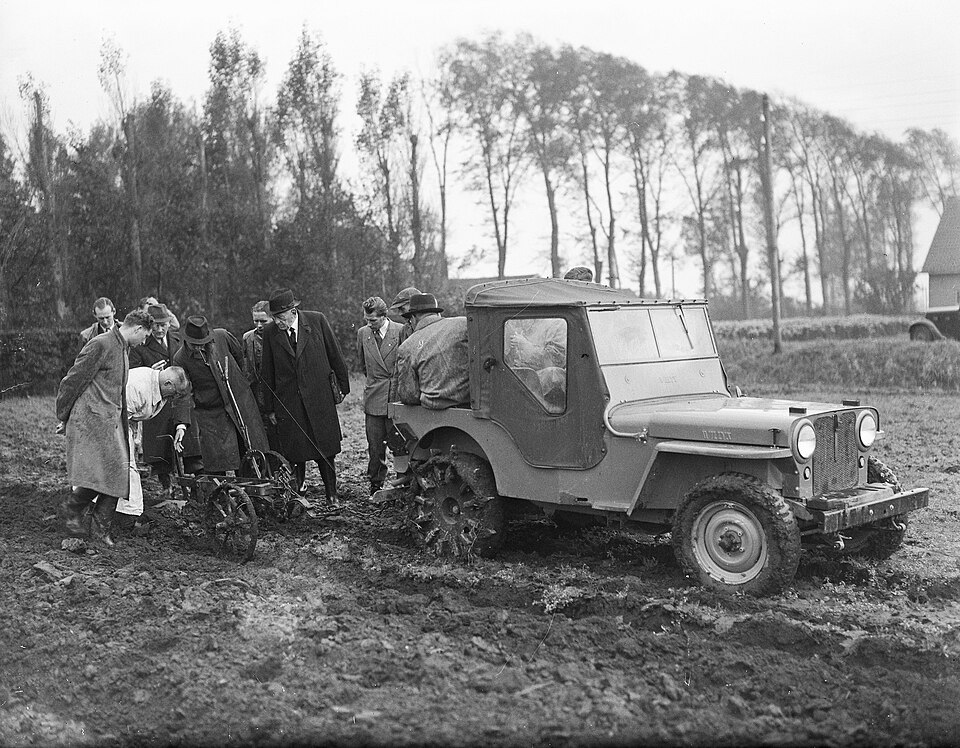
As the war began to draw to a close, Willys-Overland was already thinking about the peacetime future of the same concept. This is where the story of the CJ marks comes into being. Many people wonder why the first production civilian model is named CJ-2A and not CJ-1 or CJ-2. The reason is simple: the CJ-1 and CJ-2 did exist, but only as development and test models, not as regular production vehicles for the market. Jeep CJ history records that as early as 1944 there was one or a very small number of early CJ prototypes, and then about forty CJ-2 "AgriJeep" specimens intended for testing civilian, especially agricultural use. It was only from the experiences with those test vehicles that the real production model CJ-2A was created, the production of which began in 1945.
The CJ-2A still looked very much like a wartime MB, but its purpose was quite different. It was no longer intended as a soldier on wheels, but as a "universal workhorse" for the farm, workshop and small business. That's why it gets a rear page that opens, a spare wheel moved to the side, civilian lighting equipment, more comfortable details and a stronger T-90 transmission instead of the wartime T-84. He kept it Go-Devil engine, because it has already proven that it combines simplicity and durability, but the rest of the vehicle is adapted for a longer working life in civilian use, not only military service. Jeep's official history states that the CJ-2A was marketed as an "All-Around Farm Work-Horse," that is, as a machine that could replace some of the work previously done by horses and light tractors.
08 / The family is growing
This is precisely where the greatest historical importance of the Willys MB jeep can be seen. It was not only a successful military car, but a bridge between three eras: between the experimental Bantam BRC of 1940, the standardized wartime MB/GPW of 1941–1945. and the civilian CJ-2A in 1945. The Bantam proved the concept existed, Ford helped shape the concept industrially, and Willys The Go-Devil engine turned it into the most famous light all-terrain vehicle of the Second World War and the basis of the later CJ family and an important part of the Jeep brand identity. That is why the history of MB is not just a story about one car, but about how one of the most influential forms of car of the 20th century was born out of military necessity.
Development of a known concept: one-piece windshield and further improvements for civilian use. The low hood and L-head engine still belong to the early family look. [9]
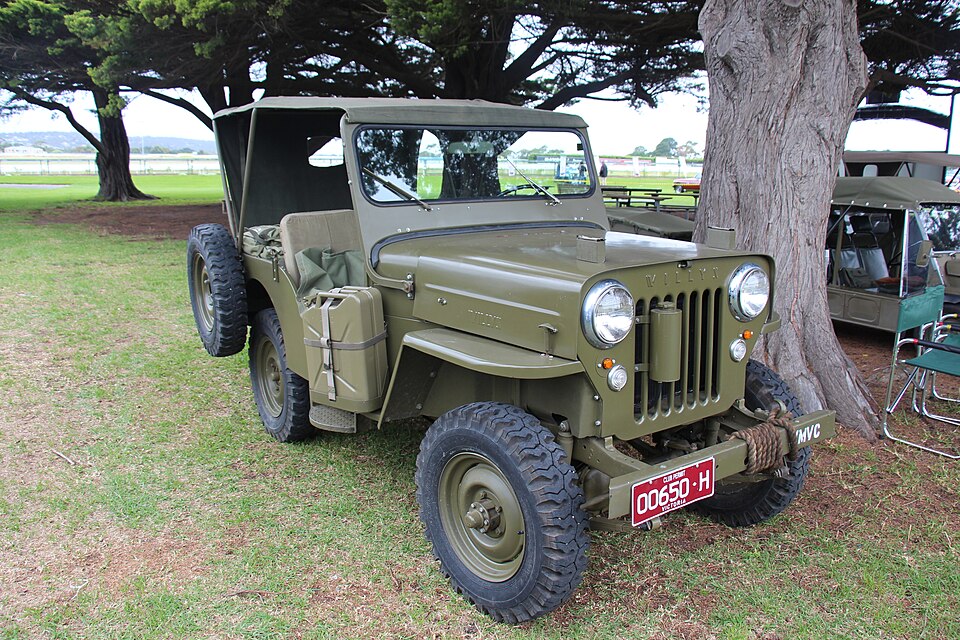
The taller hood gets a very practical reason: room for a taller Hurricane F-head engine. A change in form follows a change in mechanics. [10]
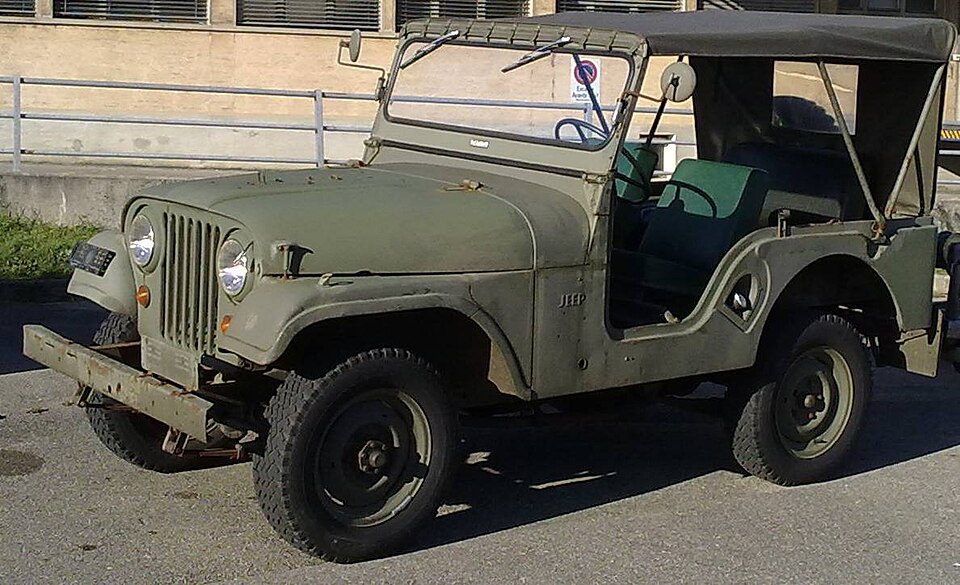
A more rounded shape, the influence of the military M38A1 and more comfort. The civilian Jeep is increasingly becoming a vehicle for leisure, not just a worker. [10]
An international network of production and sales is created under Kaiser; Jeep is moving from an export product to a global family. The later Cherokee and Wrangler carry different responses to the same basic idea: off-road usability. Not all Jeeps are direct copies of the MB, but the heritage of the small wartime 4×4 becomes the core of the brand's identity. [10] [11]
And the story continues
A simple solution, good mechanics and a willingness to fix what's broken. That's why Jeep still gathers us today in garages, at meetings and on this website.
Historical overviews are listed below. The new photos are accompanied by authors and licenses: US military public domain footage, material from the Dutch Nationaal Archief, and photos of restored vehicles under Creative Commons licenses. Photos of the first Bantam, wartime MB/GPW and restoration have been retained from the site's existing archive. Caricatures are contemporary stylized representations.